The Psychology of color in workspaces: Designing with emotion and intention
The magic of color
The power of color goes far beyond aesthetics. It is a silent language that deeply impacts our emotions and wellbeing, awakens sensations, shapes behavior, and transforms the way we inhabit spaces.
According to color psychologist Angela Wright, the very first thing our mind registers when evaluating anything is color. That’s why, in the workplace, where we spend so many hours of our daily time, the conscious use of color becomes a tool with real impact. It not just a matter of make it beautiful; it calms and supports focus, stimulates and sparks creativity, strengthens team connection, and conveys corporate identity and values.
The psychology of color applied to office design reminds us that spaces are not just containers. They are living places that resonate with what we feel. And when a space makes us feel good, inevitably, we work at ease.
The emotional power of color
Environmental psychology studies have shown that color perception influences both mind and body, directly affecting mood, stress levels, and cognitive ability. Soft, cool colors like blues and greens reduce anxiety, encourage calm, and help maintain focus. Warm tones like reds and oranges boost energy and motivation. The brain is never indifferent to a shade: every tone triggers an association, a memory, an emotion that shapes our experience of space.
In the workplace, this influence is even more significant. Designing offices is not just about arranging desks or dividing up common areas. It’s about creating emotional atmospheres that guide productivity, wellbeing, and collaboration. That inspire creativity and nurture team spirit.

Blue: serenity and trust
Blue is one of the most widely used colors in corporate environments. Its ability to convey calm and stability makes it ideal for tasks requiring prolonged concentration and analytical thinking. Studies show that light blue lowers heart rate and promotes relaxation (valuable in high-stress offices).
In meeting rooms or private offices, deep blue projects professionalism and trust. However, too much blue can feel cold or distant. Balance is key: natural light, wood, or warm accents help prevent an overly cold atmosphere.
Green: balance and wellbeing
Green is freshness and renewal. It reconnects us with nature. It is also the color of balance, bringing calm and serenity to the mind while sparking creativity. Adding green reduces screen-related eye strain and creates relaxed, welcoming environments in lounges or collaborative areas. Plants, upholstery, or small decorative touches are often enough to fill a space with freshness and wellbeing.
Its connection to the natural world also ties it to sustainability and health, values that are essential to today’s corporate cultures.
Yellow: vitality and optimism
Yellow is light, energy, and dynamism. It illuminates all on its own. Its energy conveys optimism, stimulates creativity and innovation, and encourages communication. It’s no coincidence that many startups embrace yellow in their visual identity, because it symbolizes freshness and new ideas.
In offices, it’s perfect for collaborative and creative zones, or informal spaces where ideas flow freely. But yellow requires moderation. Small touches like a piece of furniture, a panel, or a graphic detail are enough to spark enthusiasm without overwhelming. Too much intense yellow can trigger restlessness.
Red: passion and boldness
Red is passion, action, intensity. It stimulates and activates the senses. In workplaces, used wisely and sparingly, it energizes transitional areas and spaces dedicated to activity.
Too much red, on the other hand, can feel overwhelming or even hostile. In small doses (signage, furniture, accents) it adds a spark that breaks monotony and reminds us that work sometimes demands risk, and boldness.

Orange: connection and shared energy
Orange blends the vitality of red with the brightness of yellow. Its warmth invites people to socialize, encouraging a sense of community. In open-plan offices and coworking spaces, it creates friendly, dynamic, and inclusive atmospheres.
It’s particularly effective in break areas or cafeterias, where it fosters conversation and connection. Its welcoming character helps soften hierarchies, creating a relaxed climate where ideas can flow and be exchanged.
White and neutrals: clarity and spaciousness
Though often perceived as “non-colors,” white, grey, and beige form the canvas where everything else unfolds. Order, cleanliness, visual spaciousness, calm. White conveys the clarity so essential in work environments. Greys and beiges add balance and elegance, creating a sober background that supports focus without distraction.
Combined with color accents, neutrals let the space breathe and amplify surrounding tones. A neutral base means balance, on top of which vibrant colors can fully shine without overwhelming.
Black: elegance and character
Black is quiet intensity. A color of authority, sophistication, and timelessness. In workspaces, it adds depth and character, shaping environments with strong personality. Used in furniture, finishes, or architectural details, it elevates the perception of exclusivity and modernity.
It’s not a color to saturate with, but to highlight. A black wall, a matte-finished table, a lamp with dark lines: small gestures that transform an environment with sobriety and distinction.

Compositions and harmonies
The goal is not to choose one color, but to orchestrate combinations. The real power of color lies in harmony. Dominant tones define character, secondary tones add nuance, and accents awaken. Analogous palettes create softness; complementary contrasts bring energy and dynamism. The key lies in intention and proportion.
Light as an ally
Light, natural or artificial, transforms colors and how we perceive them. It can make them warm, cool, intense, or soft. Designing workspaces with abundant natural light enhances color vitality and protects visual health. With artificial light, choosing the right temperature is essential for coherence and comfort, allowing color to fully express its magic.
Color as identity
Beyond visual impact, color tells a story about who we are and how we want to be perceived. Integrating corporate palettes into the physical space strengthens the coherence between what a company says and what it shows. It turns brand values into a tangible presence.
The effect is twofold: inward and outward. For employees, those colors build a sense of belonging, fostering cohesion and commitment. For clients and visitors, they send an immediate message about the company’s personality and philosophy. Subtle, but powerful.
The office becomes a living reflection of the brand, a statement of intent, and a silent yet inspiring tool of communication.
Designing with emotion and purpose
Color is not just a decorative detail. It is a silent ally that transforms experience. Choosing it carefully is both an act of responsibility and of sensitivity. It means thinking about people, their wellbeing, and their creativity.
When applied with intention, color turns the office into more than just a workplace. It becomes a living, stimulating, human space. Designing with emotion and purpose means designing to bring out the best in those who inhabit and shape it.
The value of play at work
In workplace design, wellbeing depends not only on what we see but also on what we live. Colors surround us, but shared experiences connect us. And among those, play is standing out more and more.
Organizational psychology studies highlight how introducing play dynamics in the workplace strengthens motivation, reduces stress, and improves team communication. Play is not a distraction: it’s a universal language that fosters creativity, collaboration, and resilience.
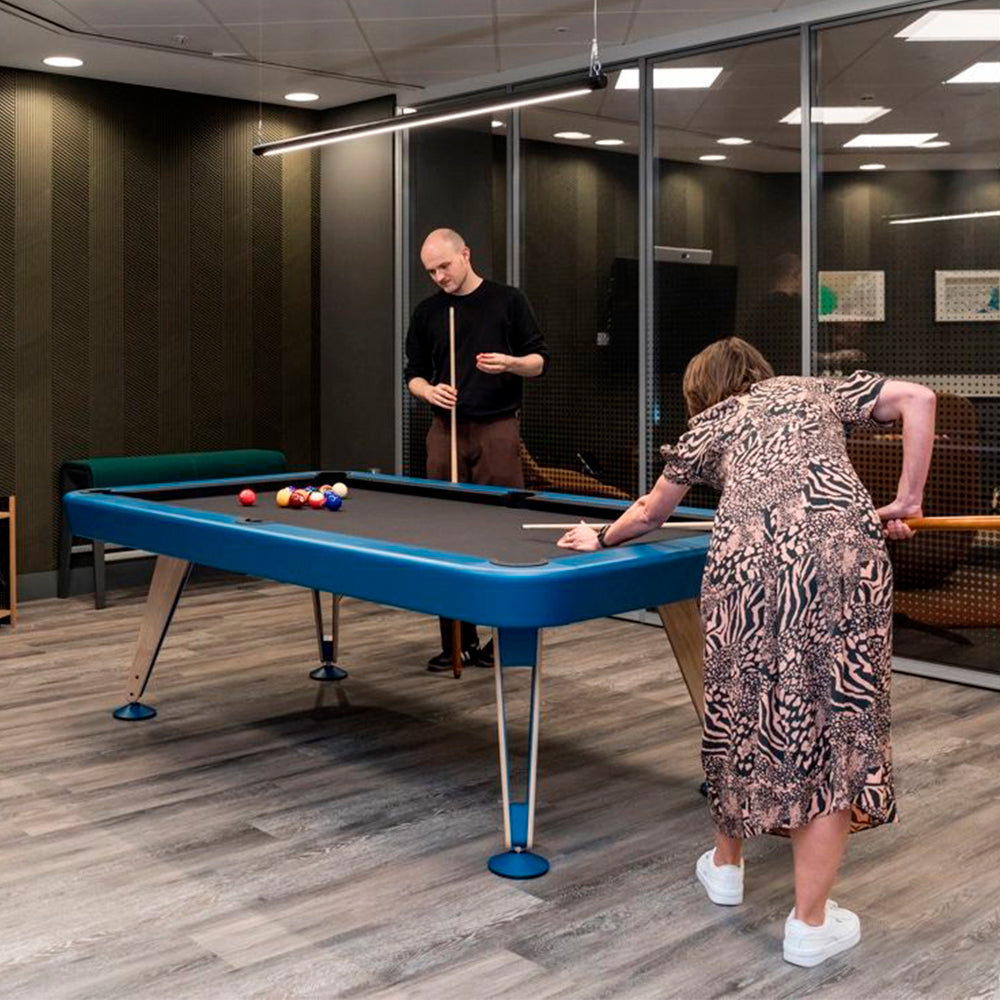
Ping pong tables, foosball, shuffleboards, or pool tables are more than just games. They are meeting points that encourage people to step away from screens, break routines, and connect spontaneously. These moments of active pause renew mental energy, spark cognitive agility, and strengthen bonds.
Like color, play transforms a space into something alive, stimulating, and human. An office that embraces both becomes a creative ecosystem where productivity grows naturally from motivation and shared wellbeing.